Beyond the Inbound Form: Using Intent Signals to Find the Buying Committee Before They Raise Their Hand
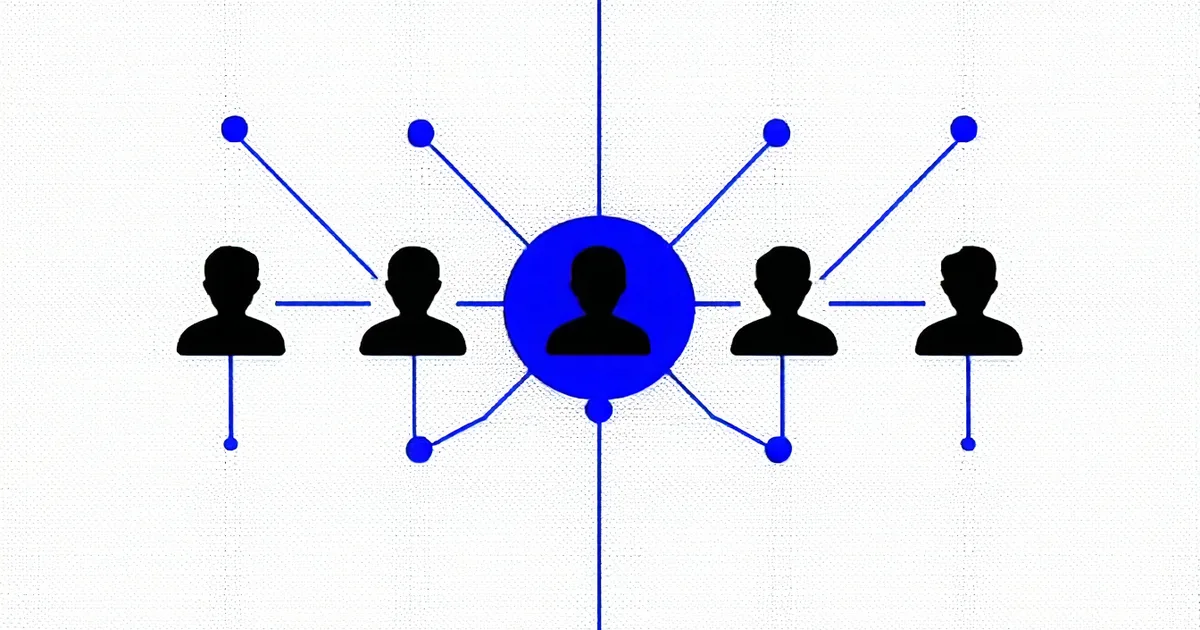
An inbound lead is one person. The deal is usually a committee of 4–7. Here's how to use technographic co-occurrence and account-level intent signals to identify likely buying committee members at the moment the first form submission lands — and route outreach to all of them.
The Single-Lead Trap
Inbound form submissions are misrepresented in most RevOps tooling as the beginning of a deal cycle. The lead submits a form, an MQL record is created, the SDR is notified, and the qualification conversation begins. This workflow treats the inbound form as the opening signal — which is accurate when the form submitter is the decision-maker, the sole evaluator, and the person who will eventually sign the contract.
In practice, B2B deals above a modest contract value don't work this way. Research from Gartner's B2B buyer studies consistently shows that typical B2B purchasing decisions involve 6–10 stakeholders from across functions. The person who fills out your form is one of them — often a practitioner doing early-stage research, rarely the economic buyer. By the time the deal closes, the buying committee has grown to include finance, security, IT, and the executive sponsor who never touched your website.
The implication is not that inbound form leads are low-value. It's that the inbound form lead is an entry point into an account, not a complete picture of the deal. The SDR who treats the form submitter as the entire deal is leaving 5–9 other potential contacts at the account unengaged during the highest-value window: the moment when the account first demonstrated intent by having someone submit a form.
What Account-Level Intent Actually Looks Like
Before getting into the committee identification mechanics, it's worth being precise about what "account-level intent signals" means in a real enrichment context — as opposed to how the phrase gets used in vendor marketing.
Genuine account-level intent signals fall into two categories:
Technographic co-occurrence signals — the pattern of tools a company installs together. Companies that add a sales engagement platform and a CRM within the same 6-month window are typically building out a dedicated sales motion. Companies that have a data enrichment tool, a revenue intelligence platform, and are actively hiring a RevOps manager have a specific organizational shape that is predictive of certain buying behaviors. The combination of installed tools tells a story about organizational readiness that no single tool adoption reveals on its own.
Behavioral proximity signals — job posting velocity in functions adjacent to your buyer persona, LinkedIn activity patterns showing company-wide interest in a topic area, recent technology changes that create a procurement trigger (deprecated tool being replaced, stack consolidation following an acquisition). These signals indicate that an account is actively evaluating solutions in a category, even if no individual from that account has engaged with your company yet.
What this is not: third-party intent data that simply shows that some anonymous user from a given IP address visited competitor websites. That signal is widely sold, frequently noisy, and often disconnected from actual purchase decisions. We are not claiming that IP-based intent signals are useless — for some use cases they're informative — but they're categorically different from the technographic and behavioral signals described above, and treating them interchangeably leads to over-triggering outbound on low-confidence signals.
Identifying Likely Committee Members From a Single Form Submission
When a form submitter arrives with a work email domain, the enrichment layer can immediately return the organizational context of their company. From that context, a buying committee hypothesis can be constructed based on the submitter's role, the detected tech stack, and the typical decision-making structure for deals of the expected size.
Consider this scenario: a revenue operations analyst at a 350-person B2B software company submits a form for a demo. Salmon's enrichment returns: headcount 350, growth rate 22% over 90 days, Salesforce CRM confirmed, Outreach confirmed, no current enrichment tool detected. The ICP fit tier is Strong.
The submitter is an analyst — likely the practitioner doing the evaluation. But at a 350-person company with a serious RevOps function, the buying committee for a CRM enrichment tool typically involves: the VP of Revenue Operations (approves the tooling decision), the Head of Sales Development (primary user, benefits directly), and potentially the VP of Sales or CRO (budget sign-off above a certain ARR threshold). The SDR who gets this lead has a decision to make: engage only the analyst who submitted, or engage the broader committee immediately.
Finding the Committee Without Guessing
The committee identification method isn't guesswork — it's a combination of LinkedIn search against the known company (filtering by function and seniority), firmographic-derived role pattern matching, and job posting data that shows which functions the company has recently hired or is actively hiring into.
At minimum, the SDR should identify and add to Outreach (or their preferred engagement platform) the likely VP/Head-of-function equivalents in the three typical committee functions for a RevOps tool deal: the revenue ops leader, the sales leadership, and the finance or ops leader who owns the budget. None of these contacts need to be formally in-funnel — they should be enrolled in an account-based sequence that positions the tool from their perspective, not a generic outreach sequence.
Technographic Co-occurrence as a Committee Structure Signal
One underused dimension of technographic data for committee identification is the implication of the tool stack on organizational structure. Certain combinations of tools are only deployed at companies with specific team compositions.
A company running Salesforce + Marketo + Outreach + ZoomInfo as their confirmed stack has made four separate tool decisions in the revenue stack, each with different budget lines, different admin owners, and different renewal cycles. The company has a dedicated Salesforce admin (or contracted Salesforce partner), a marketing operations person managing Marketo, an SDR team manager overseeing Outreach, and someone managing the data vendor budget for ZoomInfo. That's at minimum three different potential contacts, each with a relevant stake in an enrichment tool decision.
Compare to a company running HubSpot only, with no detected sales engagement platform or data enrichment: the stack suggests a smaller, less specialized team where one or two people own the entire revenue tooling decision. The committee is smaller, and the sequence personalization can reflect that — a conversation about HubSpot integration fit and a single rep as the buyer persona, rather than a multi-track committee approach.
Technographic co-occurrence is a proxy for organizational structure — and organizational structure predicts buying committee composition. We are not claiming that installed tools perfectly map to headcount or decision-making process; but for companies with a recognizable stack pattern, the tools tell you something reliable about who the relevant committee members are likely to be.
The Timing Problem: Why Committee Engagement at Form Submission Beats Later
The window immediately after a first form submission is the highest-impact moment for multi-stakeholder engagement. The company's intent signal is fresh — someone on the team just actively sought out information about a solution category. The committee members who didn't submit the form are still unaware that the evaluation has started, which means they haven't yet formed opinions or done competitive research.
As time passes from the initial form submission, the window closes in several ways. The form submitter moves forward in their own evaluation and may have already formed a recommendation. Other vendors who also have intent data or who were contacted by the submitter may have engaged the committee first. The company may move from active evaluation to "putting on hold until next quarter" if early engagement doesn't solidify the opportunity quickly.
Engaging the buying committee at T+24 hours after form submission is categorically different from engaging them at T+5 days. The account is hotter, the signals are fresher, and the SDR is establishing themselves as a high-responsiveness vendor — which is itself a signal that enterprise buyers notice and evaluate. For a team using real-time enrichment, the committee identification and outreach can happen within hours of the initial form submission, not days.
What This Looks Like in Practice
A growing B2B software company running on Outreach and HubSpot set up a multi-contact enrollment workflow triggered by Salmon's enrichment: when a lead comes in with an ICP fit tier of Strong or Moderate and the company's enriched headcount is above 150 employees, the SDR is automatically surfaced a committee candidate list — the two or three LinkedIn profiles at the company that match the expected decision-making roles for this product category, based on technographic stack profile and headcount tier.
The SDR then has a choice: manually review and selectively add candidates to an account-based Outreach sequence, or trigger the automated committee enrollment workflow. The automation adds identified committee candidates to a parallel track with messaging tailored to their likely role in the decision — the VP version of the outreach positions the ROI story; the practitioner version positions the technical integration story. Neither track is the generic outbound sequence — both are anchored in the enrichment context that arrived with the original inbound signal.
The outcome: the first inbound form submission from an account becomes the trigger for a multi-contact engagement strategy, not a single-lead qualification event. The deals that were previously closed because the initial contact didn't advance — either because they weren't the right person, or because they needed internal buy-in that never materialized — have a higher probability of progressing because the committee is engaged before the evaluation conversation moves forward without them.
Salmon's account-level enrichment — which surfaces organizational context, tech stack, and headcount signals at the moment a form lands — is the foundation for this committee identification workflow. The enrichment product page covers the full signal set returned per account and how to access committee-relevant data through the enrichment API.